
The greatest music managers nobody knows
Everyone can name the bands. Almost nobody can name the person who decided the band wouldn't do television, or who took equity instead of a royalty cheque, or who told a rock star to fire his entire band. Those decisions are the job, and the mechanics of them are kept deliberately vague by the people who benefit from that. Every profile here ends with the specific move — the one you can run this week, with no budget and no relationships. Written for underground acts and small brands, because they're the ones nobody explains this to.
The roster
12 managers, every claim sourced on the page.
- 1982–present
Cliff Burnstein & Peter Mensch
Metallica · Red Hot Chili Peppers · Def Leppard
Never be the only relationship
- 1974–present
Bill Curbishley
The Who · Robert Plant · Jimmy Page
Kill the format that plateaued
- 2006–present
Jonathan Dickins
Adele · Jamie xx · King Krule
Bank a deliberate gap
 present
Max Flohr
Ridgeclub · Ebril · McKayla Maroney
Publish your rate first
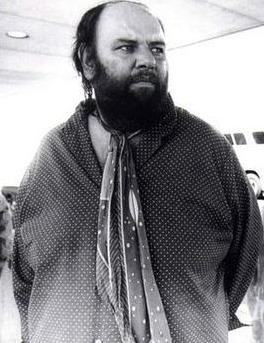 1968–1980
Peter Grant
Led Zeppelin · Bad Company · The Yardbirds
Withhold exactly one thing
- 1973–1993
Herbie Herbert
Journey · Santana (as crew) · Europe
In-house your biggest recurring cost
 1978–2013
Paul McGuinness
U2
Ask what they have that isn't money
- 1967–2019
Elliot Roberts
Neil Young · Joni Mitchell · Tom Petty
Never forward the ask
- 2015–2025
Danny Rukasin & Brandon Goodman
Billie Eilish · FINNEAS · Bishop Briggs
Don't professionalise what's working
- 2007–present
Anthony Saleh
Nas · Kendrick Lamar · Future
Route income into ownership
- 2003–present
Sarah Stennett
Rita Ora · Ellie Goulding · Zayn Malik
Fund your own development
- 2010–present
Chris Zarou
Logic · Jon Bellion
Start before anyone lets you
In their own words
What the people who actually did this job say the job is.
“You get the acts, as a manager, you deserve.”
“When you sign an artist, you're taking their life in your hands. You have to commit 100%.”
“It's disrespectful to presume that because 21 sold so many records, that you have got a divine right to sell that amount again.”
“His tough guy image came out of there being so many cowboys around and the way musicians were taken advantage of.”
“A weird mix of Haight Street benevolence and Wall Street smarts.”
“More than anyone in my life, he is a person who believed in me and gave me the confidence to realize my potential as an artist.”
“The greatest manager of all time.”
“They were never condescending to us ever — treating us like peers even though we were children at the time.”
“You can accomplish anything in the world if you don't care who gives the credit.”
“For me personally to want to work with someone, it has to be based around an emotional connection.”
“If you manage your clients like they are your own mother, you will always end up doing what’s best.”
“Don't be different to be different. Be different to be better.”
Straight answers about music management
The questions artists actually ask, answered in full — including when the answer is "no" or "not yet."
What does a music manager actually do?
A music manager runs the business of an artist's career so the artist can make the work. In practice that means building the strategy, hiring and firing everyone else on the team, negotiating deals with labels, publishers, promoters and brands, and being the one person accountable when something goes wrong. They usually take 15–20% of the artist's gross income and typically have no salary, so they are paid only if the artist earns.
How much does a music manager take?
The standard music manager commission is 15–20% of the artist's gross income, with 15% more common than 20%. Sliding scales are now normal — often 20% in year one stepping down to 15% by year three. Established artists sometimes negotiate 10–15%. Anything above 20% is unusual and should come with an exceptional track record.
Do I need a music manager?
Probably not yet. You need a manager when you have more opportunities than time — inbound offers you're too slow to answer, shows you can't route, deals you can't read. Below that line a manager has nothing to manage, and the good ones will tell you so. Build something first; management is a response to traction, not a way to create it.
How do you get a music manager?
You get a manager by being a problem worth solving — visible traction a manager can multiply — and then by being introduced rather than by applying. Managers almost never sign from cold emails. They sign from a lawyer, an agent, an A&R, a producer or another artist saying you're worth an hour. Build the traction first; the introduction is much easier to get than the traction.
What's the difference between a manager, a booking agent, a label and a publisher?
The manager runs the whole career and takes 15–20% of everything. The booking agent sells live shows and takes around 10% of live fees. The label funds and distributes recordings and takes a share of recording income. The publisher administers and exploits the songwriting copyright and takes a share of publishing. One person is strategy; the other three are functions.
What are the red flags in a music management contract?
The five that matter: any upfront or monthly fee, a term longer than about three years with no performance-based exit, a perpetual or near-perpetual sunset clause, commission on income from deals you signed before they arrived, and a power of attorney letting them sign on your behalf. Any one of them is worth walking away over if they won't move.
What makes a good music manager?
A good manager tells you things you don't want to hear, has a specific plan rather than enthusiasm, is reachable when it's inconvenient, and is willing to destroy something that currently works if the next version is better. Track record matters less than judgement, because every artist's situation is different and enthusiasm is free.
How do you become a music manager?
You become a music manager by managing someone. There is no licence, degree or credential required — you find an artist whose career you can measurably improve, agree terms in writing, and do the work. Most working managers started with an unknown artist and grew with them rather than being hired onto an established one.
How do music managers promote songs on TikTok?
By paying editors to make videos using the sound, at scale, and measuring what comes back. The reach on a track is largely a function of how many creators are cutting to it, so managers now run paid clipping campaigns — either through private creator networks or public bounty boards where the purse, the per-view rate and the verification rule are posted before anyone starts.
Managing an artist right now?
The asset that's underpriced today is short-form attention. Bounty Sounds is a public clipping board — post a purse on a sound, editors post clips, verified views pay out, and every rate is on the contract before anyone commits.