
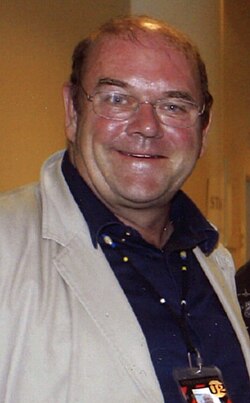
Photo: Gaëtan Grivel · CC BY-SA 4.0, via Wikimedia Commons
Paul McGuinness
U2
Paul McGuinness managed U2 for over three decades and negotiated the band's ownership of their own master recordings — plus a 10% stake in Island Records, taken in lieu of unpayable royalties, that was worth around £30m when Island sold.
“More than anyone in my life, he is a person who believed in me and gave me the confidence to realize my potential as an artist.”
Masters ownership is the single most consequential thing an artist can hold and, for most of recorded-music history, the thing they were most reliably separated from. McGuinness got it for U2 as they broke through in the mid-1980s. The Beatles never had it.
The Island story shows the same instinct working under pressure rather than from strength. Island could not afford to pay U2 what The Joshua Tree had earned. McGuinness took equity instead of cash — 10% of the company. Two years later Island was sold and that stake was reported at around £30 million for the band and their manager. A less imaginative manager takes the payment plan; a worse one sues a label he still needs.
He stayed until 2013, roughly thirty-five years, and was treated within U2 as a member of the band in economic terms rather than a supplier to it. Since leaving he has been one of the more forceful public voices on how streaming and video platforms pay artists.
Ask what they have that isn't money
When someone wants to work with you and says the budget isn't there, don't take the payment plan and don't walk. Ask what else they've got. McGuinness took 10% of Island Records when they couldn't pay U2's royalties. Your version: ad inventory, studio time, a support slot, a data feed, a placement, equity in the brand. Counterparties who can't pay cash are unusually flexible on structure, and almost nobody asks.
When they can't pay, take equity
A counterparty who cannot pay you in cash is a counterparty with unusual flexibility on structure. McGuinness converted a bad-debt situation into ownership of the debtor. Ask what the other side has that isn't money.